
Key Findings from the Study
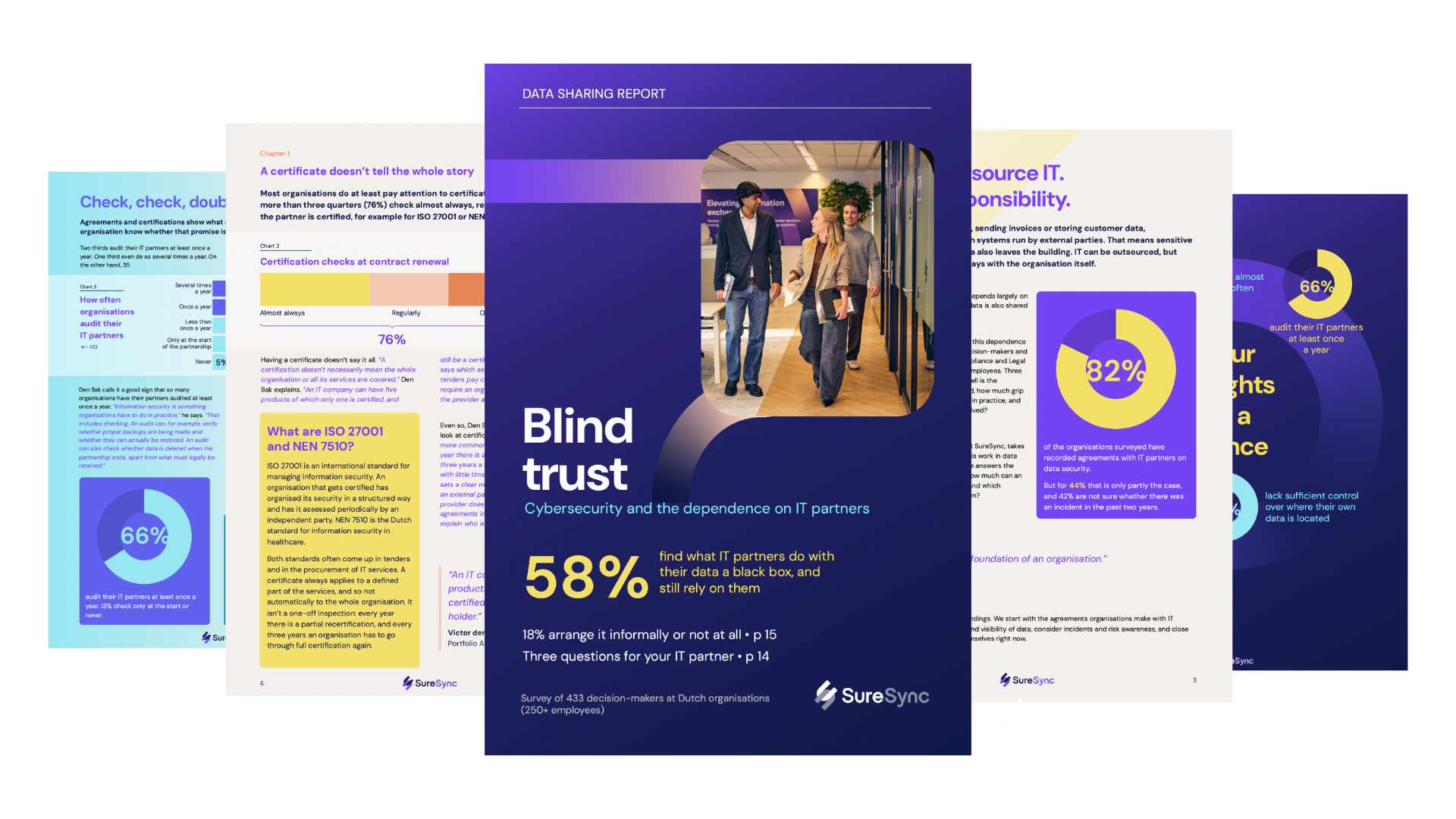
For this report, we spoke with 433 decision-makers and influencers from the IT, Finance, Data, Compliance, and Legal departments, all of whom work for Dutch organizations with 250 or more employees. We identified three key trends.

Agreements are often only partially documented
82 percent have formalized agreements with IT partners regarding data security, but for 44 percent, these agreements are only partial. For nearly one in five (18%), the arrangements remain informal or no agreements have been made at all. Certifications can help when choosing a partner, though you should verify which service a certificate applies to. An IT company with five products may hold a certificate even if only one product is certified.

Oversight often stops at the first link
Two-thirds (66%) conduct an audit of their IT partners at least once a year. Thirteen percent only conduct audits at the start of the partnership or never, even though a partner may change its processes or subcontractors over the years. Data also often ends up with parties with which the organization itself has no contract, such as the company that provides hosting or backups. When it comes to overseeing IT partners, 59 percent rely on the expertise of a regulatory body or umbrella organization.

Relying on what is visible
An organization can immediately see whether invoices are being sent out. It cannot see whether its IT partner is making proper backups. Fifty-five percent feel they lack sufficient control over where their own data is stored. Forty-two percent do not know if there has been an incident in the past two years, or only have suspicions. More than half (53%) say their organization underestimates the risks of dependence on IT partners.
Other editions of the Data Sharing Report:
AI in Healthcare: More Than Just a Technological Issue